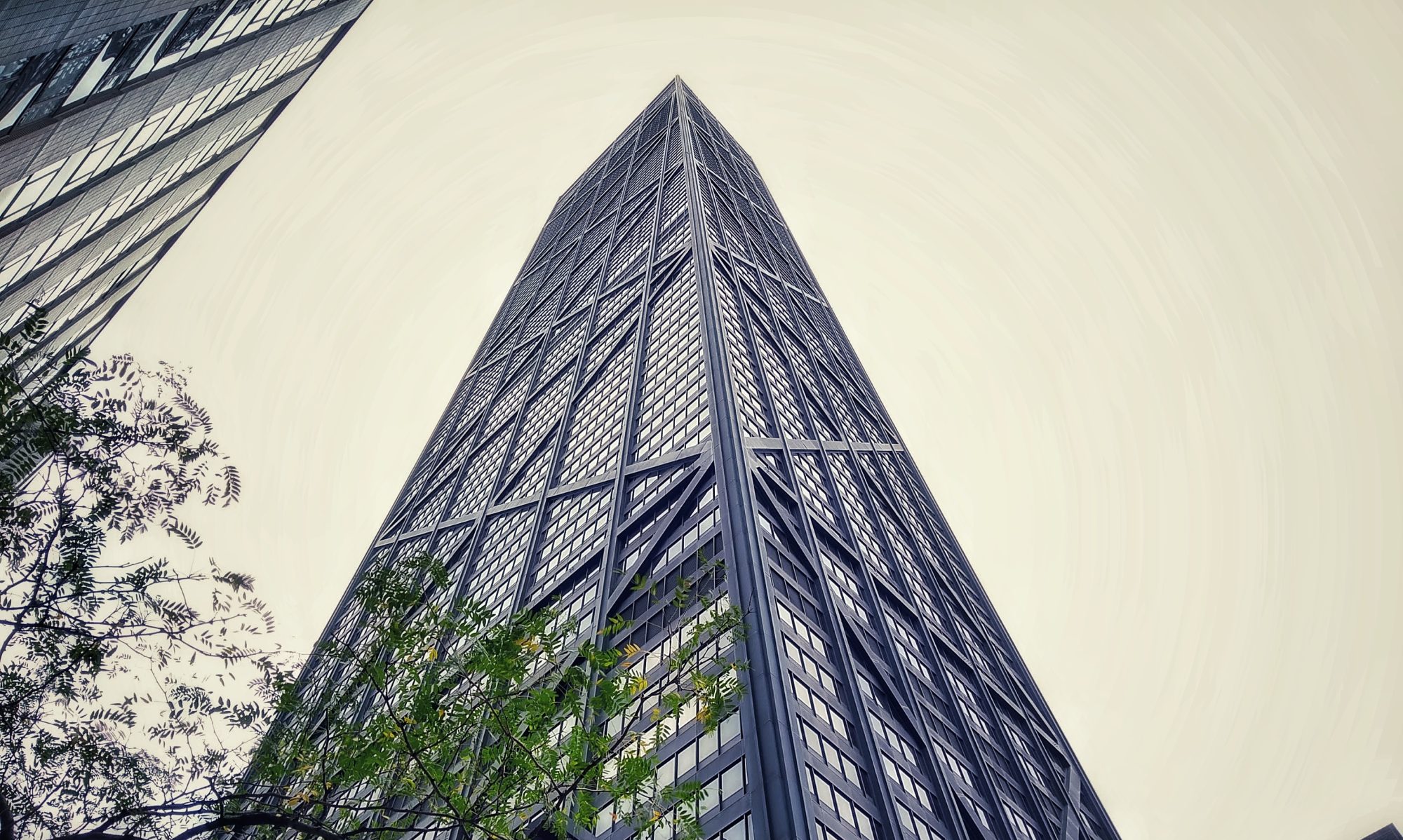
In recent weeks, public debate once again circled around a familiar accusation: architecture has abandoned beauty. Contemporary award shortlists, suburban housing developments, and public buildings are cited as evidence that aesthetic judgment no longer plays a meaningful role in architectural culture.1 The tone is often indignant: how could the profession drift so far from what ordinary people perceive as beautiful?
At first glance, this critique seems simplistic. And yet, dismissing it too quickly would be equally simplistic. The deeper issue is not whether buildings are ‚ugly‘. The deeper issue is whether architecture has developed a structural suspicion toward beauty itself.
The Historical Suspicion of Ornament
The early twentieth century marks a decisive shift. When Adolf Loos declared ornament a crime, he did more than reject decoration. He redefined architectural ethics. Beauty was no longer located in applied form but in moral clarity — in structural honesty, rationality, and the discipline of reduction. Modernism did not eliminate aesthetics; it reconstituted it. The beautiful became synonymous with the true. In a Brutalism seminar I held this past semester, students confronted precisely this transformation through the writings of Banham and the Smithsons. Banham’s reading of Brutalism was not anti-aesthetic; it proposed a new aesthetic grounded in material legibility. The Smithsons spoke of “as found” — a category not of ugliness but of unfiltered reality. The problem is not that modern architecture rejected beauty. The problem is that it replaced shared aesthetic intuition with professional criteria that require initiation.
The Expert–Public Divide
Empirical studies repeatedly demonstrate a divergence between architects’ aesthetic judgments and those of the broader public. Exposed concrete may be praised within the discipline for its tectonic clarity and atmospheric depth, while lay observers experience it as cold, monotonous, even hostile. This divide is not trivial. Architecture is not gallery art. One may avoid a museum exhibition; one cannot avoid the built environment. When architects respond to public discomfort by calling for better architectural education, they inadvertently confirm the suspicion that architecture has become self-referential. Expertise hardens into insularity. The welfare state once sought something different.
Brutalism and the Social Contract
Within my ongoing research framework, The Concrete Consensus: Architecture and the Postwar Social Contract, 1950–1975, I have argued that postwar architecture was not primarily aesthetic experimentation. It was a political and social instrument. Consider Unité d’Habitation by Le Corbusier. It has been caricatured as a “concrete monster” or “dwelling machine” in journalistic discourse. Yet its ambition was ethical: to reorganize collective life under conditions of mass housing scarcity. Brutalism emerged not from aesthetic perversity but from a belief in material truth and social legibility.
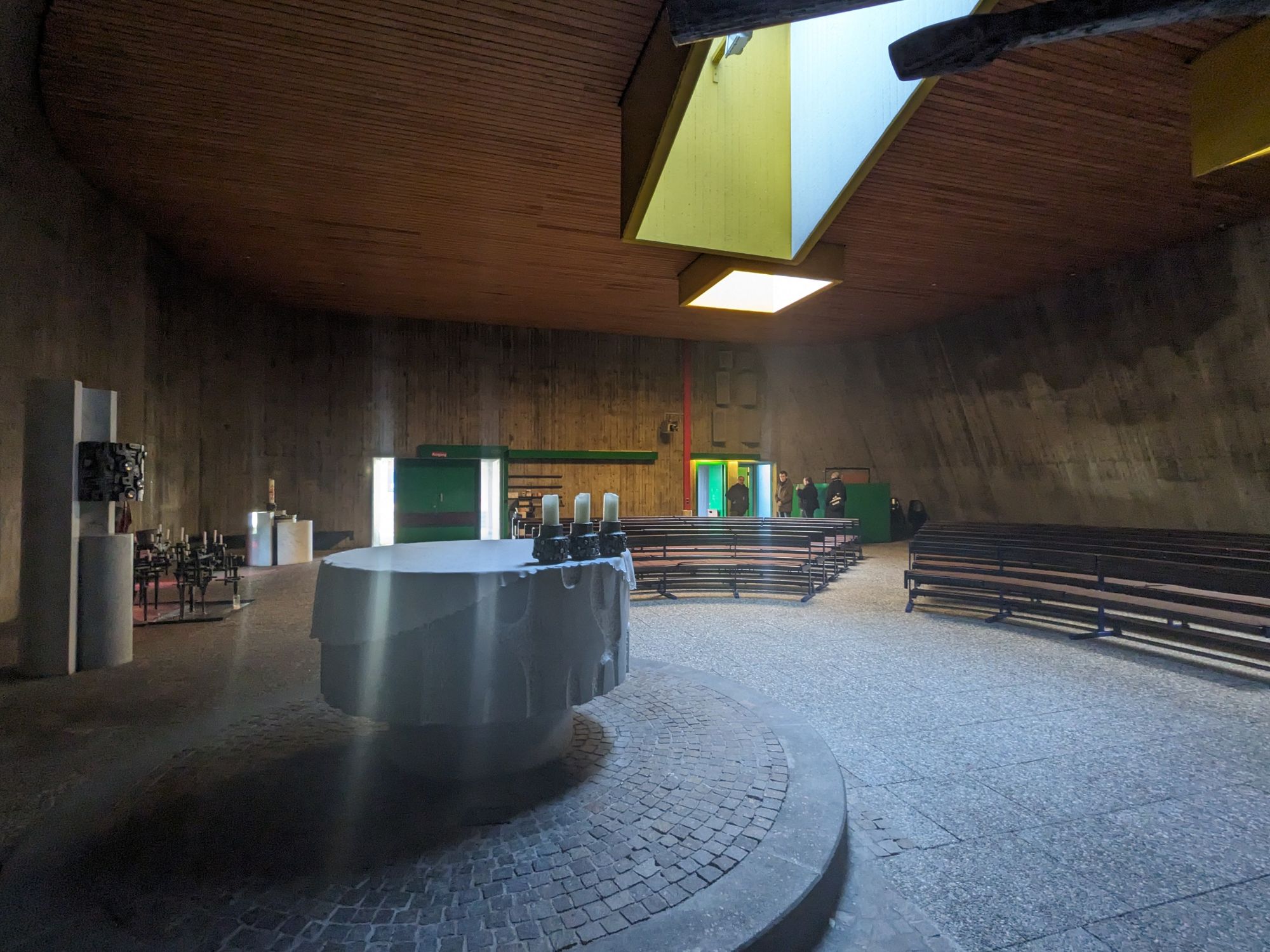
A more modest but equally instructive example is the St. Monika Catholic Community Center, Stuttgart-Feuerbach by Klaus Franz. Its exposed concrete volumes and clearly articulated structure demonstrate how formal austerity could serve communal coherence. The building’s tectonic legibility and carefully modulated massing generate dignity without ornament. Here, severity is not hostility but civic clarity. It also shows that architectural quality is possible and can be found everywhere.
The tragedy lies elsewhere. The social contract that once justified formal austerity has eroded. What remains, in many contemporary developments, is austerity without utopia — reduction without ethical narrative. When the ethical horizon disappears, material severity is easily reinterpreted as indifference.
Beauty Is Not Decoration
Public debate often collapses the question into a false binary: either historicizing nostalgia (Disneyland, Las Vegas or Frankfurts Römer for example) or sterile minimalism. This dichotomy impoverishes the discourse. Beauty in architecture is not synonymous with ornament. Nor is it equivalent to popular taste. Beauty emerges when proportion, material, light, and urban context converge into coherence. It is a relational category. Even modest interventions — depth around window openings, variation in façade articulation, calibrated color — can alter perceptual judgment significantly, as especially Mies van der Rohe showed in his minimalistic works. The issue, then, is not economic determinism. Cost pressure does not mandate aesthetic negligence. What is required is attention. As Sarah Williams Goldhagen pointed out: Quality in architecture is not a question of money, because every decision made during the architectural design process involves choosing between a better or worse solution, regardless of the budget.
The Ethical Dimension of Form
We tend to forget that beauty has measurable psychological impact. Environmental psychology confirms that built form influences well-being, stress levels, and social behavior. Urban monotony is not merely dull; it can be destabilizing. In earlier essays I have written that architecture mediates between necessity and meaning. If we understand growth selectively — not as quantitative expansion but qualitative refinement — then beauty becomes an ethical category. A society that invests heavily in infrastructure but neglects experiential quality undermines its own civic fabric.
A Post-Brutalist Reflection
Our seminar discussions made one point clear: Brutalism was historically coherent. It aligned material expression with structural honesty and collective aspiration. The problem arises when its language is detached from its ideological foundation. We now inhabit a post-Brutalist condition. The techniques remain; the social narrative does not. Perhaps the task before us is not a return to ornament, nor a continuation of defensive minimalism, but a renewed synthesis:
- Material truth without aesthetic contempt
- Technical efficiency without experiential monotony
- Social responsibility without visual indifference
Beauty must re-enter architectural discourse not as nostalgia, but as civic obligation and as focused on the perception of spatial situations.
Beyond Irony
The contemporary built environment often oscillates between irony and neutrality. Both evade commitment. If architecture once helped materialize the postwar social contract, it must now renegotiate its relationship to the public gaze. Not by capitulating to sentimentality — but by acknowledging that aesthetic experience is not trivial. It is infrastructural. Beauty is not an indulgence. It is a form of respect, of reflection and recognition.
- cf. Rico Bandle: Hässlich gilt als gut – Schönheit ist in derArchitektur schon lange kein Kriterium mehr, in: NZZ, 17.02.2026. ↩︎
 Luigi Monzo