The decision to rebuild the Notre-Dame spire and roof in a way that incorporated modern methods and materials while maintaining the overall historical design certainly sparked a lot of debate about the approach to heritage restoration, but finally it undermined the original philosophy of Eugène Emmanuel Viollet-le-Duc (1814-79), who built the roof and spire that was destructed by fire in 2019 with a mindset quite different from the one adopted by the recent restoration.
1. Use of Modern Materials
Viollet-le-Duc’s philosophy emphasized the use of traditional materials and techniques, but he also advocated for creative and structural innovations. However, he never fully embraced the use of modern materials like steel or glass in restoration. The decision to use contemporary methods—such as steel framing and reinforced concrete for the restoration—is a departure from Viollet-le-Duc’s approach, which aimed for historical authenticity.
This shift to modern techniques contradicts Viollet-le-Duc’s emphasis on craftsmanship and the continuity of traditional building techniques. The use of modern construction techniques in a highly historic building arguably prioritizes efficiency and speed over the preservation of historical craftsmanship.
2. The Spire’s Modern Adaptation
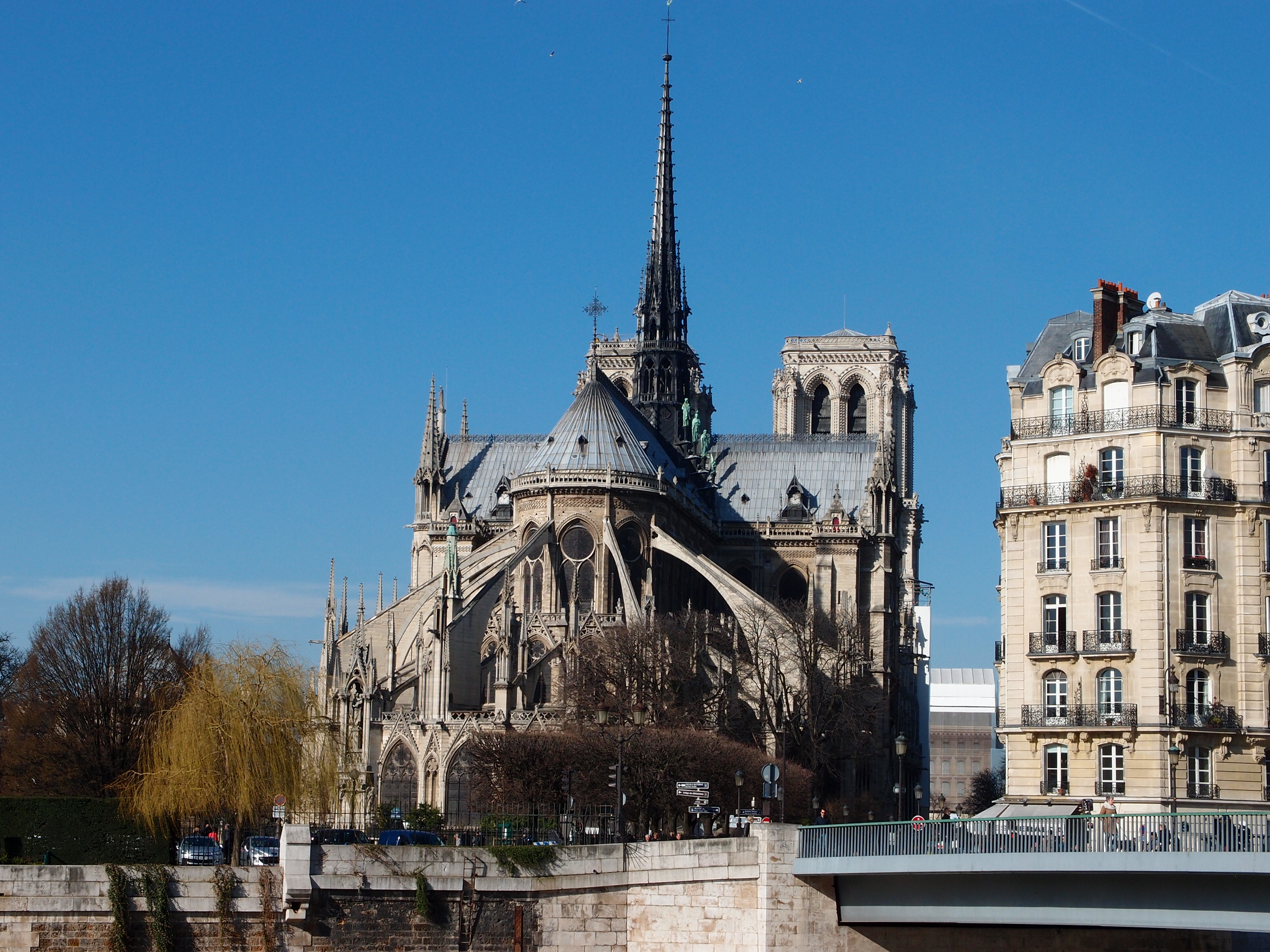
The reconstruction of the spire, initially designed by Viollet-le-Duc, became a controversial point in the debate. While the spire was recreated in the same shape as Viollet-le-Duc’s, the materials and techniques used were a mix of traditional craftsmanship and modern technology.
Viollet-le-Duc’s philosophy involved a deep respect for the original forms, but it also acknowledged that the historical form should be interpreted and perfected. The modern engineering solutions (e.g., the use of stainless steel for structural elements of the spire) introduced a contemporary element that can be seen as violating his own rule of historical consistency.
3. Philosophical Shift Towards Modernism
One could argue that by allowing the use of new technology, modern engineering solutions, and potentially innovative methods in the restoration, the restoration of Notre-Dame’s roof and spire essentially shifted away from Viollet-le-Duc’s ideal of restoration as a faithful reproduction.
Viollet-le-Duc believed that a restoration should not only repair a building, as it was actually done, but also ensure that it remained consistent with its original character and form. The integration of modern methods into the restoration process, while necessary in some respects for structural integrity, are counter to his belief that restoration should maintain a historical soul.
Conclusion
Following some thoughts of Timothy Samuelson in regard to Louis Henri Sullivan’s approach to architecture it may be useful to remember, that it is the creative idea of architecture that gives a vibrant life to buildings; buildings that otherwise won’t have an emotional power. The Cathedral of Paris has an immense emotional power, she possesses a beauty that in fact derives from her interrelation with her present time and use rather than from an adoration of the past.
The reconstruction of Notre-Dame, especially with the modern materials and the incorporation of new engineering techniques, undermines the essence of Viollet-le-Duc’s philosophy in a few key ways. Although his spirit of restoration might still be present in terms of recreating the spire’s original form, the decision to prioritize contemporary technology and techniques over a purely traditional approach are a departure from the idea of a faithful restoration that stays as true as possible to historical accuracy.
In a way, this modern approach could be seen as a reinterpretation of Viollet-le-Duc’s legacy, rather than a direct continuation of it. Thus, while Viollet-le-Duc’s methods shaped the initial restoration of Notre-Dame in the 19th century, the current decisions about its restoration and repair reflect a different set of priorities: functionality, modernity, and efficiency in technical matters combined with strictly conservative restoration in matters of shape and materials, rather than the creative approach to reconstruction that Viollet-le-Duc championed.
NB: The picture above shows Notre-Dame de Paris in 2014.
 Luigi Monzo