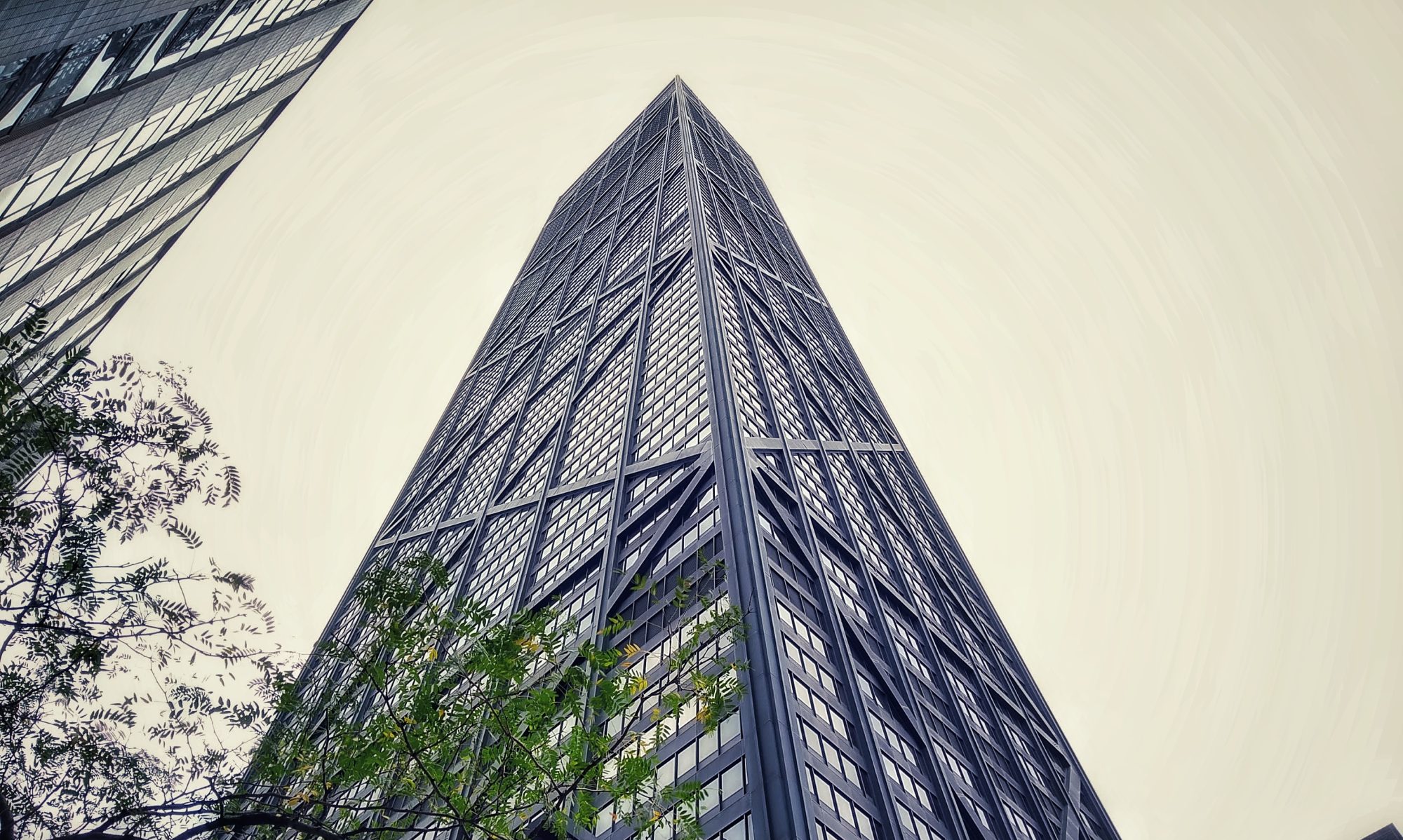
„Architecture—as the measure of civilization—arises when it becomes the clearest, most elemental, and most perfect expression of a people who deliberately choose, observe, and acknowledge those works that, through great effort, reveal the intellectual values of all humans.“
— Giuseppe Terragni, manuscript from 1941 (cited in Zevi, Giuseppe Terragni, Bologna 1980, p. 118).
What is architecture?
Is architecture the art of building? Is it the outcome of persistent striving to meet challenges? Is architecture a science? Is there a morality in architecture, something that has nothing to do with constructive honesty or the like? No. Architecture is not a science, and it should never pretend to be one! Architecture is more than the sum of its parts.
Architecture matters deeply because it shapes a substantial part of our environment. I don’t want to place it opposite organically growing nature. If human existence has legitimacy—and I believe it does—then so do the things we create. They deserve to be understood as an equal part of nature. For me, our environment is divided into two parts: one that evolves organically and autonomously of humanity, and another—the architecture—that arises from human will, thinking, and hand, and that cannot emerge entirely on its own.
If we acknowledge architecture as an intrinsic part of our natural world—shaping our lives through what surrounds us—then it becomes obvious that architecture also embraces the intangible aspects of human experience, such as the poetry of a poem. But if one tries to reduce such an art to a primarily logical, provable science, one ends up insisting that beyond mathematical equations there is no creative force at work. Two plus two always equals four, blind to the power of architecture that lives between or even behind the lines of life—where sometimes two plus two could be three or five. To reduce architecture to the tyranny of the verifiable is to cloak oneself in the illusion of rationality, favoring only what can be proven. Ethics, knowledge, even culture get reduced—within a network of political mechanisms—to inputs for a hypocritical society. Après nous le déluge!
Perhaps my contemporaries—wanting to preserve appearances—will deny this, or suggest I dwell only on the negatives of civilization. They would be mistaken. Look closely at how our social systems function, and you’ll see an imaginary material value system shaping how people think and act—continuously, pervasively. Call it a negative dynamic in the process, with devastating consequences large and small. Insight, the power to form consciousness, recedes behind fixed expectations or is confined to a narrowing cage of vanity and image—how else do user-prompted corporate identity or „transparent manufactories“ make sense?
„All our perceptions and notions are given to us through the objects surrounding us.“ (Étienne-Louis Boullée, 1987, p. 55) Architecture is not an exact science—and that is precisely its strength. It enables architecture to be a filter for worldly events; part of deep critical reflection; a way to articulate a profound understanding of our existence.
Architecture has a moral dimension—yes, an ethics. And it’s the ethics of those it serves, those who create it. Architecture does not exist for its own sake, nor is it exhausted by the „refined syntactic exercises“ of an institutionalized profession. For as long as we’ve reserved architectural discourse and education for the dogmatic certainties of modernism, and confined its critique to polished rhetoric, architecture has been reduced to the art of building—in the Vitruvian sense. Architectural history and theory are filled with commentary about proportions, harmony, symmetry—yet this has led us today into a sprawling landscape of architecture misbranded as engaged individualism within a limited lexicon or “panopticon” of architecture.
In this context, the admonition that architects should first learn to speak before they speak their own architectural language feels superficial. Who can assure us that, having learned a language, true, free, non-normative critical speech can still emerge—or is even now possible? We see this problem even with leading figures in architecture, like Frank Gehry, Peter Eisenman, or Zaha Hadid. Architecture is the victim of a dogmatic star system that reaches down into the periphery, carried on by architects themselves.
„Perhaps, as an Englishwoman, I may say that architecture is always about appropriateness—regardless of national traditions. It’s about asking: What do I find in the context? How do I relate to the urban texture? Whether I integrate or contrast with a building depends entirely on the place itself.“
— Louisa Hutton, as cited in Die Zeit, February 17, 2013.
There are too many architects to sincerely believe that content-based revolution can still occur—breaking through trivial formal innovation for architecture as a consciousness-forming, culture-creating act. Yet the responsibility remains with architects not to surrender to the flood of civilizational forces, but to practice architecture as an artful manifestation of the social order’s ongoing competition.
In this environment of ignorance and de-cultivation, it’s essential for architecture to transcend the elitist naïveté that focuses only on built or labeled architecture. Every design, every concept—whether realized or not—belongs to a larger whole. That recognition alone shows that architecture can only derive its answers from a conscious understanding of the essential, wholly detached from systemic pressures.
The architect is not merely an ornamentation specialist or competitor in design or technical prowess, but holds a profound responsibility—one that gathers and amplifies the responsibility of each person in ways only architecture can. As Aldo Rossi rightly said, architecture is the coscienza civile—the civic conscience.
Architecture is not the result of a dogged aesthetic pursuit of overcoming tasks. Vitruvius, often seen as normatively influential, is no serious architectural theorist. His significance rests largely on being the only surviving architectural writer of antiquity—and even so, he embodies the professional posture of many architects today.
„Mettre la nature en œuvre“ („putting nature into effect“) (Boullée, 1987, p. 63)—our task as architects is to faithfully engage with nature, not—as Vitruvius advocates—to evoke images through assembly of bodies for mere aesthetic effect. Because those bodies must, to be convincing, be part of our history, transcending knowledge to ground the consciousness of the present and future. Architecture must absorb the richness of our world and express it in a way that becomes central to our identity and collective memory.
„Architecture is man’s great sense of himself embodied in a world of his own creation.“ — Frank Lloyd Wright, 1955.
Architecture is also not, as Claude Perrault claimed, the product of some fantastical creative act or aesthetic indulgence—used by a self-satisfied elite as a pretext for architectural diktat.
Limiting architecture to designerly application—scrubbing at surface appearances while slavishly following pre-defined nomenclature—is a symptom of an ignorant devotion to a skewed material value system.
It is not the architect’s job to change the world. Yet it is the duty of every individual—and of the architect especially, within their power—to conscientiously take a stand, both in thought and practice. You cannot cite Schiller while treating architecture as mere service; you cannot design soap bubbles and call them organic; you cannot build a glass exhibition hall and claim it expresses evolution; you cannot construct a so-called ‘Epicenter’ for Prada while simultaneously proposing ‘concepts’ for Lagos, and pretend coherence.
Architecture is ultimately a question of attitude.
Luigi Monzo, 2002
 Luigi Monzo