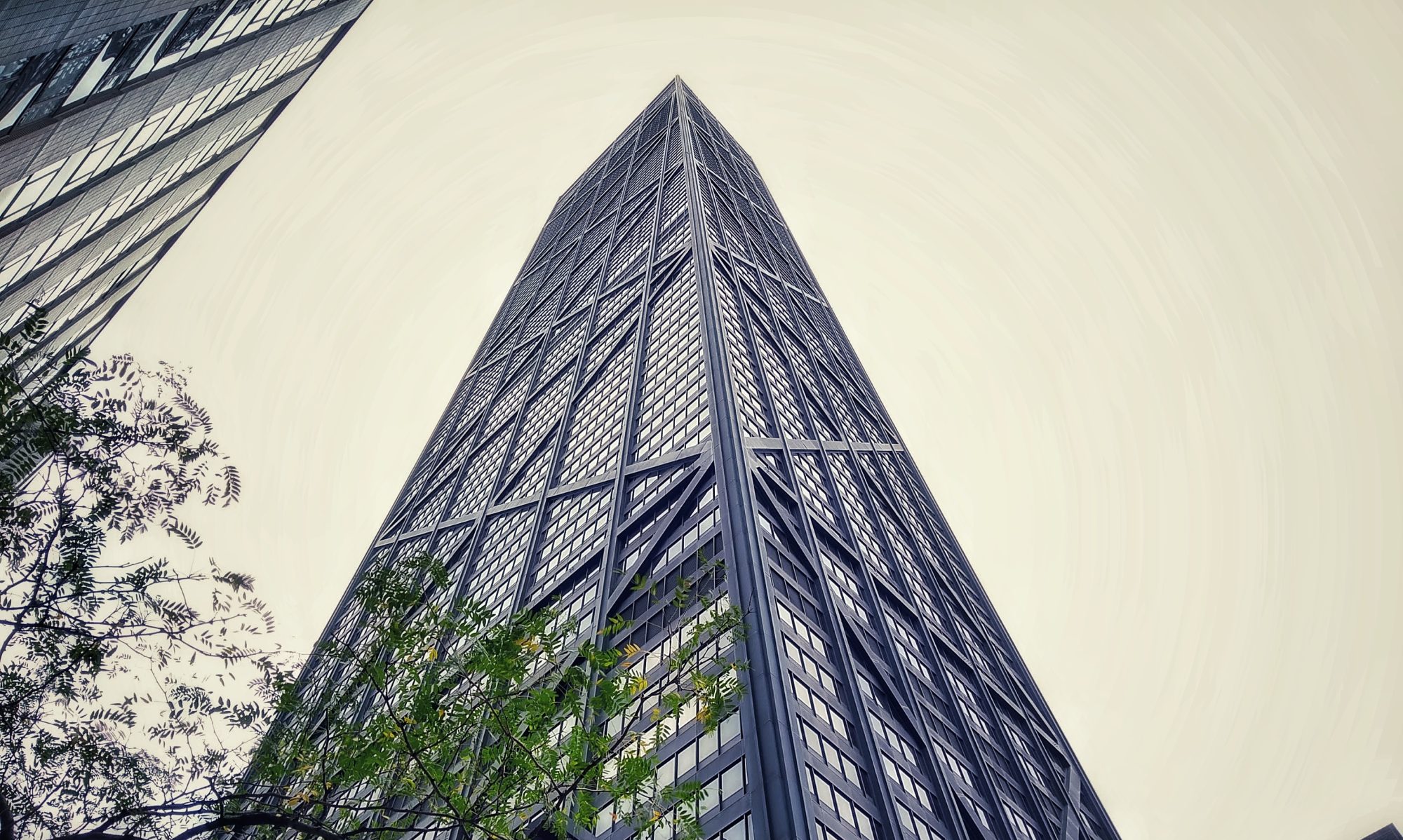
Foster’s New Tower and the Lost Civic Contract

Norman Foster’s new tower at 270 Park Avenue is a telling marker of how architectural mass has changed its meaning. In the postwar decades, designers like Paul Rudolph, Denys Lasdun, and Gottfried Böhm used weight, structure, and spatial density to embody institutions—universities, professional bodies, parishes—that belonged to the public realm. Their muscular forms carried ethical …

Beyond Growth: The Measure of Progress and the Architecture of Renewal

We live in an age that mistakes acceleration for progress. The speed of production, the expansion of data, the cult of innovation — all are celebrated as signs of vitality. Yet beneath this restless surface lies a quiet exhaustion. The old faith in progress — once both moral and material — has hollowed into mere …

The Hands That Built the Future: On Craftsmanship and the Paradox of Brutalism

It is one of the great paradoxes of twentieth-century architecture: that the buildings which appeared most austere and raw — the massive concrete structures of the 1950s to 1970s — were in fact realized with an extraordinary degree of care, precision, and craft. In an age of economic boom, growing labor costs, and expanding workers’ …

The Architecture of Self-Reliance: Emerson’s Philosophy in Wright’s Buildings

Every culture is haunted by the question of origins. Where does authenticity begin? For America, two figures answer in remarkably parallel ways—one with words, the other with buildings. Ralph Waldo Emerson, the philosopher of Self-Reliance, and Frank Lloyd Wright, the architect of organic modernism, never met across time, yet their work speaks like two voices …

Valerio Olgiati e l’Atelier di Linard Bardill: dove spazio e musica si incontrano

A Scharans, nel cuore dei Grigioni, Valerio Olgiati ha progettato per il cantautore Linard Bardill un atelier che non è solo luogo di lavoro, ma strumento poetico.All’esterno l’edificio appare come un volume compatto e severo. Ma varcata la soglia si apre un cortile quadrato, un vuoto luminoso che diventa centro vitale: spazio di concentrazione e …

Sérgio Ferro: Architecture from the Worksite

Between Architecture and Exile Sérgio Ferro’s path defies linearity. Trained in Brazil under João Vilanova Artigas, he entered the optimism of modernism—only to confront its contradictions. His exile in France, his turn to painting, and his refusal to practice architecture all mark a life shaped by fracture and resistance. Brasília’s Hidden Violence What defined Ferro …

Rethinking the Phoenicians in Sardinia: Between Local Agency and Mediterranean Networks

A Question ReopenedDid the Phoenicians really colonize Sardinia? For generations the answer seemed obvious: ancient sources spoke of colonies, modern textbooks repeated the story, and archaeology was read through the lens of conquest. Yet the ground tells a subtler tale. Recent scholarship invites us to rethink not only what the Phoenicians did, but also what …

The Bridge That Never Was: Messina’s Endless Promise

Few projects embody the paradox of Italian infrastructure like the bridge over the Strait of Messina. Announced, inaugurated, suspended, and revived in endless cycles, the bridge has become less a piece of engineering than a political allegory—resurfacing whenever governments need a symbol of ambition, only to vanish again in the fog of indecision.The idea is …

Stadium Dreams and Real Estate Realities: Serie A’s Urban Question

From Football to Real Estate Italian football has always been more than a sport. Today, however, Serie A increasingly reveals itself as a laboratory where urban development, financial speculation, and cultural identity intersect. Stadium projects are no longer only about the game. They are catalysts for massive real estate operations, bargaining chips between municipalities and …